
Pittsburgh Clay Soil: Why Your Lawn Struggles (and How to Fix It)
Maintaining a lush, green lawn in Western Pennsylvania can feel like an uphill battle. If your grass looks thin, struggles to hold color during dry spells, or pooling water transforms your yard into a muddy swamp every spring, the problem is not necessarily your watering or mowing routine. The primary issue usually lies beneath the surface in Pittsburgh's dense, clay-heavy soil.
Understanding how clay soil behaves and how to manage its unique challenges is the secret to building a resilient, vibrant lawn that lasts year-round.
Why Does Pittsburgh Soil Have So Much Clay?
Pittsburgh soil has a high clay content because of the region's geological history and natural weathering of native sedimentary rock like shale and limestone. Over thousands of years, river deposits and rock degradation left behind microscopic mineral particles that pack together tightly. Unlike sandy soils that have large gaps between particles, clay particles are flat, plate-like structures that stack tightly on top of one another.
This natural composition leaves minimal pore space for oxygen, water, and essential nutrients to move freely to turf grass roots.
What Makes Clay Soil So Difficult for Lawns?
Clay soil causes lawn problems because its dense particle structure creates extreme soil compaction, suffocates root systems, and prevents proper water drainage.
Here are the specific ways clay soil negatively impacts your grass:
- Severe Soil Compaction: Foot traffic, lawnmowers, and seasonal weather pack clay particles into a concrete-like barrier. Grass roots cannot penetrate deep into hard clay, forcing them to remain shallow and weak.
- Waterlogging and Runoff: During heavy rain, clay absorbs water very slowly. This leads to standing water that rots grass roots or creates steep slope runoff that washes away fertilizers.
- Nutrient Lockout: While clay naturally holds onto minerals, the lack of oxygen in compacted soil prevents turf roots from absorbing those nutrients effectively.
- Thatch Accumulation: Beneficial soil microbes need oxygen to decompose dead plant matter. In compacted clay, these microbes die off, leading to a thick layer of dead organic matter (thatch) that further smothers your grass.
How Can You Fix Clay Soil in Pittsburgh?
You can fix clay soil by combining core lawn aeration, topdressing with organic matter, and maintaining proper soil pH levels through targeted liming. Because you cannot physically remove the clay from your property, long-term soil management focuses on opening up the soil profile and introducing beneficial amendments.
1. Mechanical Core Aeration
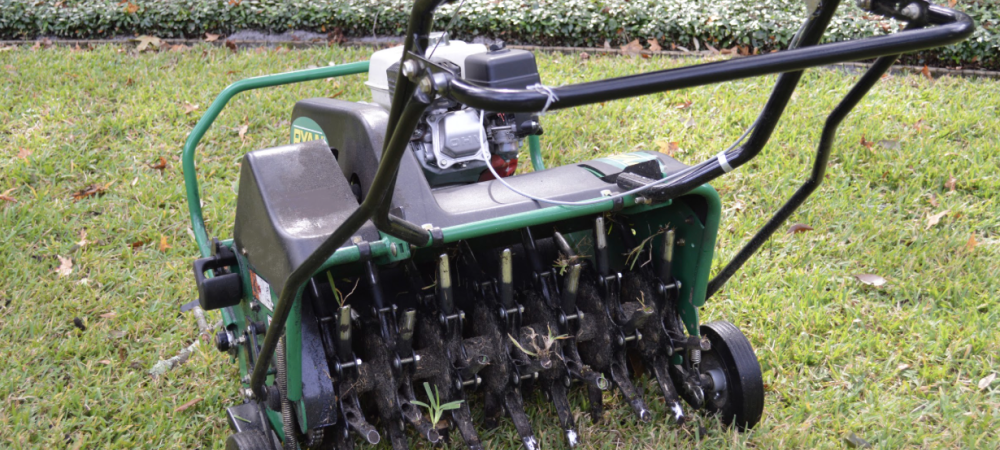
Core aeration is the foundation of clay soil restoration. Specialized machinery extracts small plugs or cores of soil from your lawn. Removing these physical plugs breaks up soil density, relieves pressure, and opens clear channels for air, rain, and nutrients to reach the root zone.
2. Topdressing with Compost
After aerating, applying a thin layer of high-quality compost or organic matter allows rich material to fill the newly opened core holes. Over time, organic matter breaks down heavy clay, improves water filtration, and feeds beneficial microbial life in the dirt.
3. Balanced Soil Chemistry and Liming
Pittsburgh clay tends to lean acidic, which further restricts nutrient uptake. Applying soil-balancing agricultural lime neutralizes acidity and optimizes the chemical environment for cool-season grasses like Kentucky Bluegrass and Turf-Type Tall Fescue.
4. Overseeding with Resilient Turf Grasses
Combining soil cultivation with overseeding fills bare spots with grass varieties bred to withstand local climate extremes and tough soil conditions. A dense, thick lawn naturally suppresses weeds and builds a deeper, stronger root system.
Need Help Restoring Your Lawn's Soil?
If hard, compacted clay soil is preventing your yard from reaching its full potential, professional soil care makes all the difference. Contact Lawn Sense today to schedule a comprehensive evaluation and learn more about our core aeration and soil treatment options.