

Lawn Care in Cranberry Township, PA
Cranberry Township is one of the fastest-growing communities in western Pennsylvania, and one of the most demanding places to grow a healthy lawn. Butler County's clay-heavy soil compacts under foot traffic, sheds water before roots can absorb it, and chokes grass from the roots up. Add in the hilly terrain throughout subdivisions like Fernway, Autumn Hill, and The Woodlands, where slopes send nutrients downhill before they can do any good, and it's clear why so many Cranberry lawns look good in April and struggle through August!
That's exactly the kind of problem Lawn Sense was built to solve. We've been treating lawns in the North Hills and Butler County since 1997, and our state-certified technicians understand the soil chemistry, seasonal timing, and specific weed and pest pressures that define Cranberry Township properties. We focus exclusively on lawn health — no mowing, no landscaping — just the science of building turf that actually lasts.
We earn your business through results, not contracts. Every service is backed by our 100% satisfaction guarantee and free re-treatments if anything falls short.
Our lawn care services in Cranberry Township include:
- Custom Lawn Fertilization and Soil Chemistry
- Targeted Weed Control (March through November)
- Core Aeration and Overseeding
- Preventative Grub Control
- Soil-Balancing Lime Applications
- Flea, Tick, and Mosquito Control
- Perimeter Pest Control
- Tree and Shrub Care

Main Office
Lawn Care Programs in Cranberry Township, PA
A great-looking Cranberry Township lawn doesn't happen with a single treatment — it's built over a full season of well-timed applications. Our programs run six scheduled visits from March through November, calibrated to the growth cycles of the cool-season grasses — Kentucky bluegrass, perennial ryegrass, and fine fescue — that perform best in Butler County's climate.
Here's how the season breaks down for Cranberry Township lawns:
- Early spring (March): Pre-emergent crabgrass barrier plus starter fertilizer to wake the lawn out of winter dormancy without pushing shallow top growth.
- Late spring (April/May): Secondary pre-emergent application and fertilization as the lawn enters its peak growth window.
- Early summer (May/June): Higher-potassium fertilizer blend to harden the turf before Cranberry's humid summer sets in — the period when cool-season grasses face the most stress and disease pressure.
- Mid-summer (June/July): Slow-release summer fertilizer to carry the lawn through heat without burning it. Spot treatment for any weeds breaking through.
- Early fall (August/September): The most important application of the year. As Butler County temperatures drop and roots shift into active development mode, this feeding drives deep root growth that determines how the lawn performs next spring.
- Late fall (October/November): Winterizer application — a slow-release formula that banks nutrients in the root system before dormancy and sets up fast, clean green-up the following March.
Every program begins with a free lawn inspection. We walk your property, identify problem areas, and build a treatment plan around what your specific lawn actually needs — not a generic program designed for a different region.
Organic Lawn Care Options
If you prefer to keep synthetic inputs off your property, a priority for many Cranberry Township families with young kids and dogs, we offer an organic program using natural fertilizers and plant-based treatments. Organic programs take longer to show results and require more applications, but they build long-term soil health in ways synthetic programs alone don't. Either way, you get a treatment plan built for your lawn's conditions.
No Contracts. Your Choice, Every Season.
We recommend a full-season program for the best results, but we leave the decision with you. Year-round visits or one-time help, we work on your terms. If you're ever unsatisfied after a visit, call us, and we'll come back to re-treat at no charge. That's our guarantee, not just a marketing line.



Lawn Aeration & Seeding in Cranberry Township
Butler County clay is dense by nature, and after years of foot traffic, mowing, and seasonal freeze-thaw cycles, it gets worse. Compacted soil in Cranberry Township stops grass roots from growing deeper than a few inches. Water runs off instead of soaking in. Fertilizer sits on the surface instead of reaching the root zone. The result is turf that greens up briefly in spring and goes thin and patchy every summer — not because it's being neglected, but because the soil physically can't support healthy root development.
Core aeration solves this directly. We pull plugs from your soil throughout the lawn, opening channels for air, water, and nutrients to reach the root zone. For Cranberry Township properties on heavily compacted soil, especially newer builds where topsoil is thin over a graded clay base, aeration is the single most effective treatment we offer.
We time aeration for early fall — late August through October — when Butler County soil is still warm enough for new roots to establish, air temperatures have dropped, and cool-season grass has its best window to grow deep before winter. Following aeration, we overseed with cool-season blends matched to your sun exposure, slope, and soil conditions, including fine fescue varieties for shaded sections of your yard.
What to Expect from Our Lawn Aeration Service
- Core plug extraction throughout the lawn — plugs are left on the surface to decompose and return organic matter to the soil.
- Slope and high-traffic paths prioritized — the areas in Cranberry Township subdivision lots that compact fastest get the most attention.
- Precise overseeding immediately after aeration, while the soil channels are open for optimal seed-to-soil contact.
- Hardy grass varieties suited for Pittsburgh's climate — bluegrass, ryegrass, and fescue blends that handle cold winters, humid summers, and the foot traffic that comes with family neighborhoods in Cranberry.
If your lawn shows brown patches that feel spongy or peel up from the soil easily, that's a sign of grub activity beneath the surface — not just compaction. We check for both during our free inspection and can address grub control alongside aeration for a complete fall program.
Weed Control in Cranberry Township
Drive through Cranberry Township in late spring, and you'll see the same weeds in lawn after lawn: crabgrass spreading along driveways and sidewalk edges, dandelions in thin spots, clover filling in low-nitrogen turf, and ground ivy creeping into shadier sections of the yard. These aren't random, they're telling you something specific about the underlying soil conditions. Crabgrass fills compacted bare spots. Clover signals low nitrogen. Ground ivy moves into areas where turf is too thin to compete.
Our weed control program runs from March through November and uses two layers of protection:
- Pre-emergent applications in early spring: Applied before soil temperatures hit 55°F — the threshold when crabgrass germinates. For Cranberry Township, that window typically opens in late March to mid-April. Timing matters: a late application doesn't prevent crabgrass, it just chases it. We watch soil temperatures and apply at the right moment, not by calendar date.
- Post-emergent spot treatments throughout the season: For dandelions, oxalis, plantain, clover, and ground ivy that push through after spring, we treat at the right growth stage using EPA-registered herbicides that target weeds selectively without harming your turf.
We don't blanket-spray and leave. We monitor between visits and catch new problems early — before a handful of dandelions turns into a lawn full of them.
Weed Control Works Best as Part of a Complete Lawn Care Program
The most effective long-term weed defense is a thick, healthy lawn that leaves no room for weeds to establish. Our core aeration and overseeding service builds that density by breaking up compaction and filling bare spots before weeds can claim them. Homeowners who combine weed control with a fall aeration program see better results on both fronts and spend less on retreatments over time.
Flea & Tick Control in Cranberry Township
Fleas and ticks are great at hiding—they can hang out between blades of grass, under outdoor furniture, and even in the cracks in the driveway. Not only are they annoying, but fleas and ticks also cause skin issues, allergic reactions, and illnesses like Lyme disease. To reclaim your yard and protect your family, trust our flea and tick control in Cranberry Township. We’ll eliminate these pests and keep them out of your yard for good!
Our flea and tick treatment includes:
- A free inspection of your property, performed by one of our expert technicians.
- Thorough treatment of your entire lawn, plus tree lines and shrubbery.
- Recurring visits to make your protection never lapses.
- Free re-treatments if you experience problems between scheduled visits.
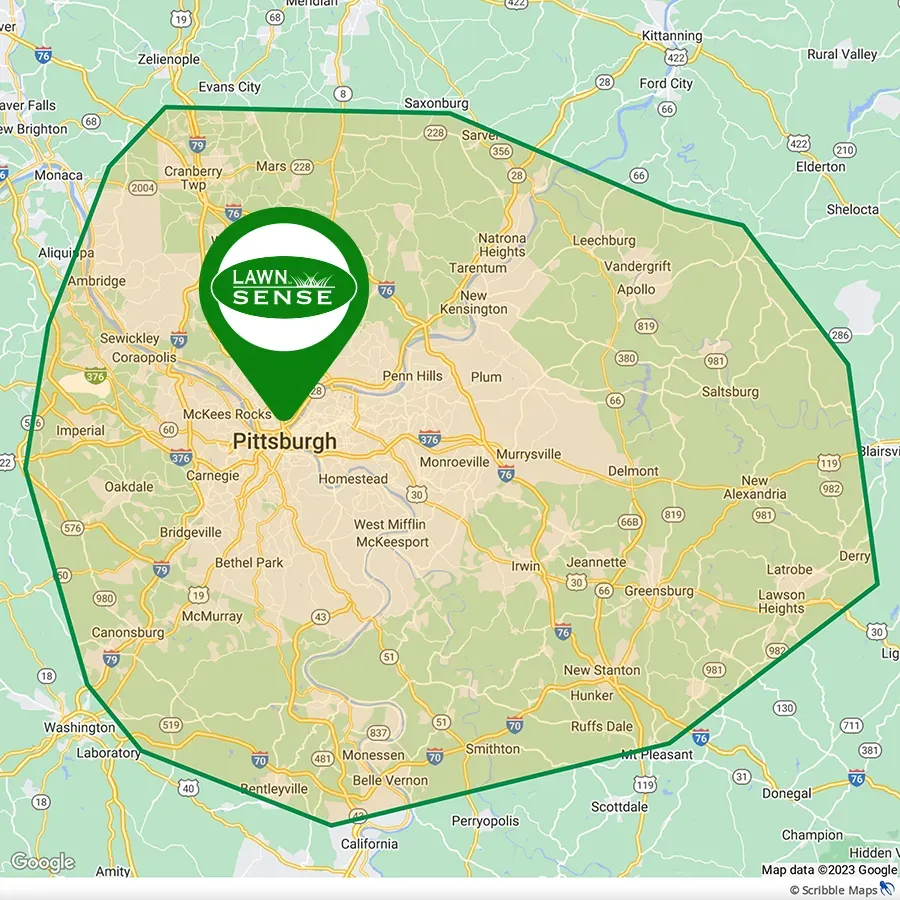
Areas We Service Near Cranberry Township
Your happiness is our top priority! To ensure you have the best experience possible, our services come with a 100% satisfaction guarantee. If you have any problems after our visit, let us know and our technicians will gladly make things right! That includes re-treating at no additional cost.